Mia Schmidt · 16 September 2026
Regional Archives Across Germany Tap Kinora Tools to Protect Silent-Era Film Heritage
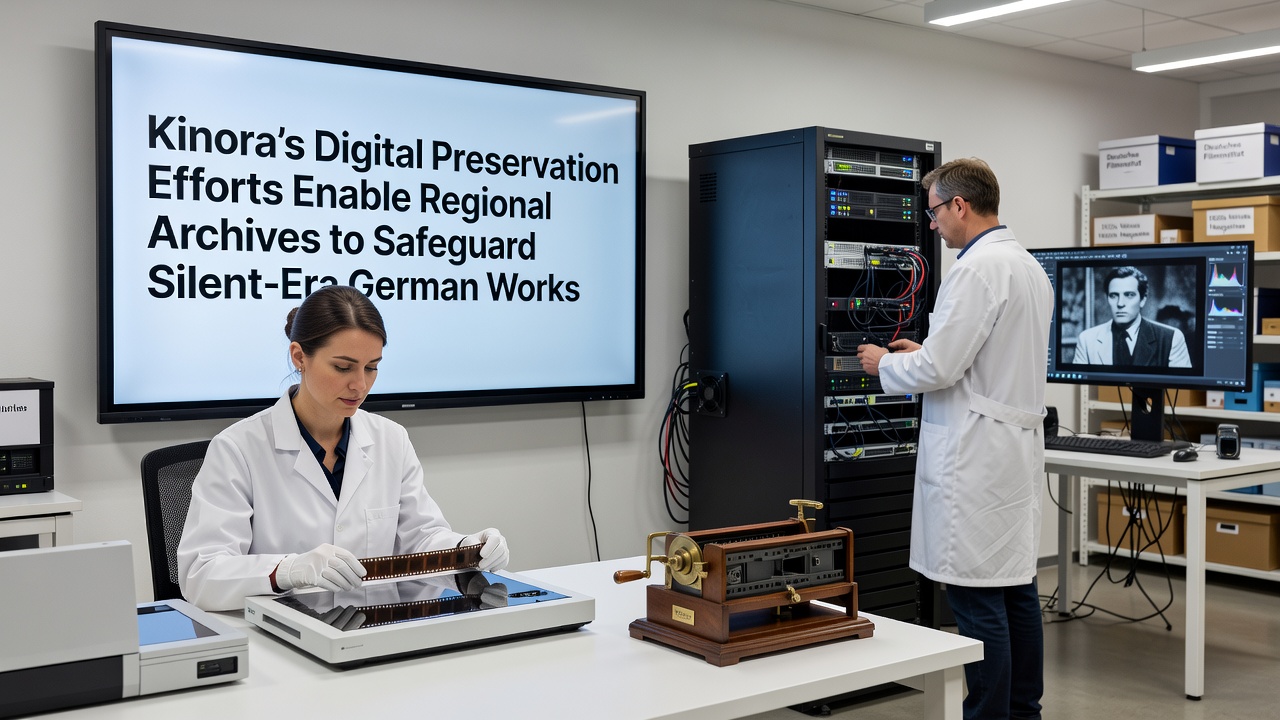
Regional film archives throughout Germany have begun integrating digital preservation platforms developed by Kinora into their workflows, allowing smaller institutions to stabilize and digitize fragile silent-era prints that might otherwise deteriorate, while larger national collections focus on cataloging and public access initiatives.
Scope of the Silent-Era Challenge
German silent films produced between 1910 and 1929 survive in varying conditions across municipal and state-run repositories, and many nitrate-based reels require controlled environments plus high-resolution scanning before chemical breakdown sets in, according to data compiled by the Association of European Film Archives. Regional facilities often lack the specialized equipment and trained staff needed for large-scale projects, yet they hold unique local productions and regional newsreels that national institutions do not duplicate.
Kinora supplies open-source digitization protocols alongside cloud-based storage solutions that meet international standards for metadata tagging, and archives in cities such as Dresden and Leipzig report completing initial batches of 200 to 300 reels within the first twelve months of adoption.
How Kinora Resources Function in Practice
Technicians upload high-resolution scans to a secure platform that automatically generates checksums and creates multiple redundant copies across geographically separated servers, while the same interface flags frames showing signs of vinegar syndrome or color fading so conservators can prioritize treatment. Training modules developed in partnership with university film studies departments walk archive staff through each step without requiring travel to a central facility.
One project in Bavaria completed transfer of a 1924 feature and its accompanying short subjects during a six-week period, after which the digital files became available for scholarly research under controlled access agreements.
September 2026 Milestone and Expanded Reach
Plans call for a coordinated rollout of upgraded scanning hardware to twelve additional regional sites beginning in September 2026, timed to coincide with a joint workshop organized by the German Film Institute and the International Federation of Film Archives. The schedule allows participating archives to test updated software that incorporates automated subtitle alignment for intertitles, reducing manual transcription time by roughly 40 percent according to preliminary internal tests.
Funding for the hardware phase comes through a combination of state cultural grants and matching contributions from private foundations focused on audiovisual heritage, and project leads expect the expanded network to add approximately 1,500 new digitized titles to publicly searchable catalogs by the end of 2027.
Documented Outcomes at Participating Institutions
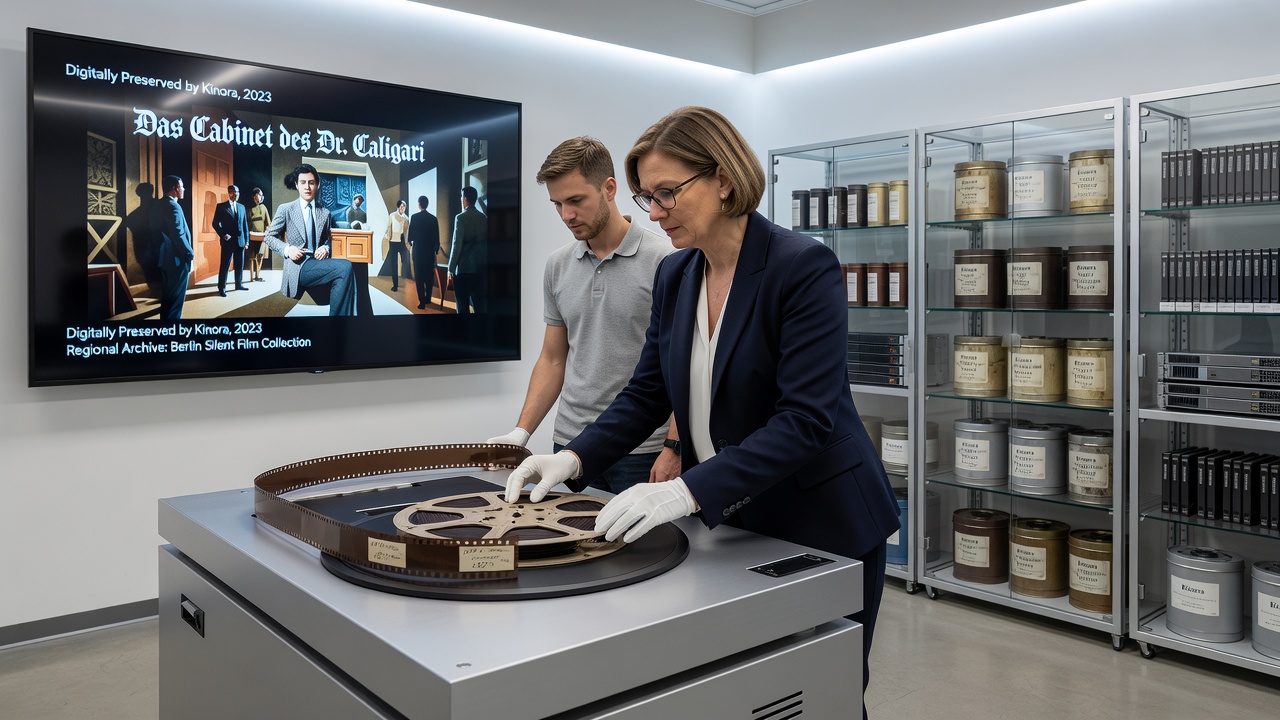
Archives that adopted the platform early note measurable improvements in collection stability metrics, with one facility in North Rhine-Westphalia reporting that 92 percent of its pre-1925 holdings now exist in at least two digital formats alongside the original elements. Researchers at the University of Hamburg published a 2025 study tracking access requests before and after digitization, finding that online viewings of the newly available titles increased fivefold within the first quarter of release.
Case examples include the recovery of a previously unknown industrial film shot in the Ruhr region and the stabilization of hand-tinted dance sequences from a 1922 variety program, both of which had been stored in suboptimal conditions for decades before Kinora-supported scanning began.
Technical Standards and Interoperability
Kinora systems align with the FADGI guidelines for still-image digitization and the European Broadcasting Union specifications for moving-image metadata, ensuring that files produced in smaller regional labs remain compatible with larger national databases. This interoperability matters because regional archives frequently exchange material with institutions in neighboring countries, and standardized files simplify cross-border loans.
External partners such as the National Film and Sound Archive of Australia have referenced similar platform architectures in their own regional outreach programs, illustrating how modular digital preservation approaches scale across different institutional sizes and funding levels.
Conclusion
Continued integration of Kinora-supported tools positions regional German archives to safeguard a broader range of silent-era works while maintaining compliance with evolving international preservation standards, and the scheduled September 2026 expansion will test whether the current model sustains momentum across a wider geographic spread. Ongoing documentation from participating sites will supply fresh data points for future assessments of long-term collection viability.